
Marketing used to focus primarily on demographics: age, income, interests, marital status, etc. It all helped marketing teams know who to target with the campaigns. Now, with everyone having phones and access to the internet at all times, something more immediate matters more, and that is location, or where the prospect is in a given moment.
Location has become one of the strongest signals of intent. A person walking through a shopping mall is probably in a different mindset than someone sitting at home browsing social media. The same goes for someone arriving at an airport, attending a sports event, or commuting home from work. What people see and what they are willing to act upon depends on the context, such as the environment they are in and their current mood and activities.
Location-based marketing gives brands and marketing teams the advantage in positioning. Instead of pushing the same message to a broad audience, companies can connect with people based on their physical whereabouts. That could mean showing ads to users near a retail store, promoting happy hour to workers within a few blocks, or sending app notifications when someone enters a specific area.
What makes this approach effective is timing and demand. When location data is used well, marketing stops feeling random. The message appears when it actually makes sense.
Brands that understand this are building strategies around proximity, movement, and real-world behavior. In this article, we’ll look at how location-based brands use these signals, why the approach works, and how businesses can apply it in practical ways.
What Marketers Mean By Location-Based Marketing
Location-based marketing is about using a prospect’s location to decide what message to show, when to show it, and where to send them next.
At the basic level, location-based marketing looks like this: the marketing team runs an ad only in Serbia, only in Novi Sad, or only within a few kilometres of your business. That is useful for a location-based business, but as far as marketing efforts go, it’s just a starting point.
Location-based marketing now is more about context and less about geography. If you are able to match your message to the moment, you stop guessing and start being relevant.
How Location-Based Marketing Shows Up In Marketing Campaigns
Location-based marketing is easiest to understand when you see it in action. Here are the most common ways it shows up in real marketing campaigns, from simple targeting tweaks to more advanced, in-the-moment tactics.
Geotargeting
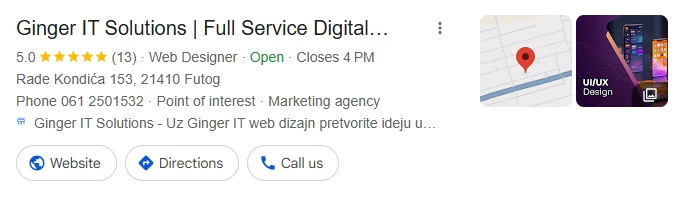
Geotargeting is showing ads or content only to people in a specific geographic area. For a local business, this is the baseline. It keeps ad spend focused on prospects that will actually visit them. Google’s search results are a well-known example of geotargeting. If someone types in “pharmacy”, Google will use the IP address of the device performing the search to figure out where the user is and show them results about pharmacies in that area.
Geofencing
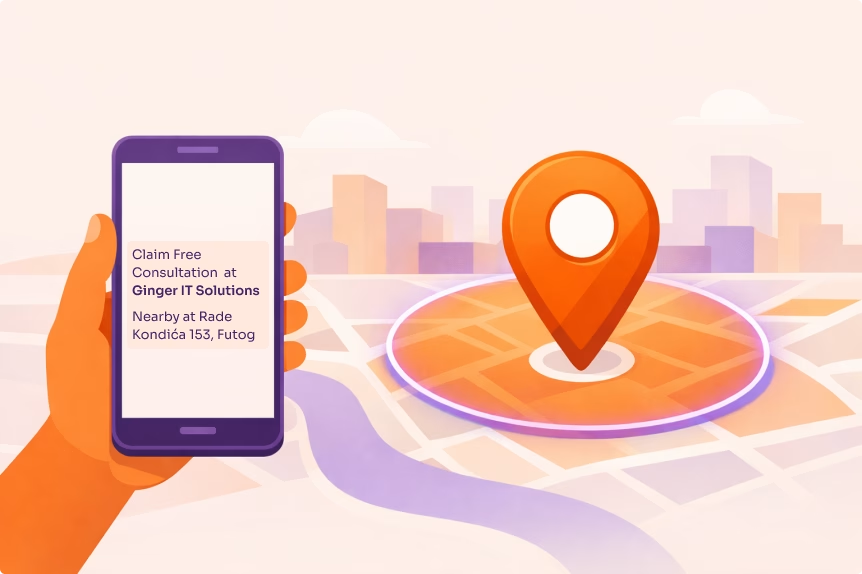
Geofencing takes geotargeting a step further. Instead of targeting a specific region, a marketing team will draw a virtual boundary around a specific location, such as a store, a restaurant, or a competitor’s address (which we will talk about shortly). When someone enters or exits that boundary, they can be triggered to receive an in-app message, a push notification or a retargeting ad. A coffee shop, for example, could geofence a nearby train station and send a discount notification to commuters passing through often.
Beacon Technology

Beacons are small physical devices placed inside a location that communicate with smartphones via Bluetooth. When a customer with your app installed walks past a specific shelf or display, the beacon can trigger a relevant message, such as a discount on the product they are standing in front of. Precision is much tighter than with geofencing, as beacon technology is working at the level of metres rather than kilometres.
Conquesting
Conquesting is when a brand geofences a competitor’s location to reach their customers. If someone is browsing at a competitor’s store, they might see your ad offering a better deal or a reason to come to you instead. It is an aggressive tactic, but it is used widely in retail, automotive, and hospitality.
Location-Based Social Ads
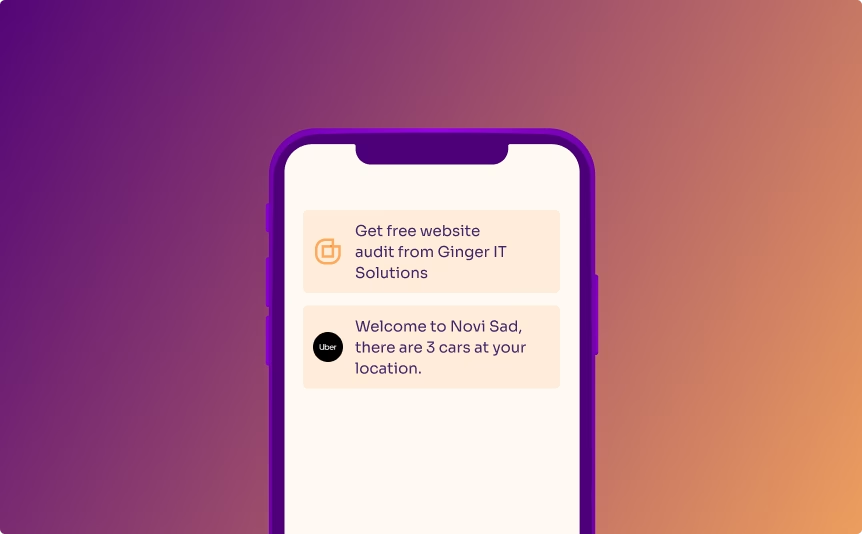
Platforms like Meta and TikTok allow advertisers to target users based on the locations they have visited, not just where they are at the present moment. Location-based social ads mean you can reach someone who visited a stand-up comedy show last week, a gym three times this month, or a competitor’s store in the past 30 days. This makes your paid marketing efforts more flexible and more likely to attract customers.
Why Location-Based Marketing (Almost Always) Works
Location and context change intent. The environment people are in often shapes what they are willing to see, click, and act on.
Location plus context is what makes location such a powerful marketing signal. It is not just about where someone is, but what that location suggests about their next move. Proximity to a store can indicate purchase intent. Presence at an event can reveal specific interests. A daily commute pattern suggests routine and predictability, both of which are useful for timely marketing efforts.
Location can also influence the marketing message and even the product offer itself. Global brands frequently adapt their menus, promotions, and campaigns to match local habits and cultural preferences. A product that performs well in one region may look completely different in another.
Fast-food chains are a good example of this approach. Dessert flavors, ingredients, and limited offers often vary by country or region depending on what local customers are used to eating. These adjustments make the brand feel more relevant and familiar to the audience it is trying to reach.
Traditional demographic targeting tells you who someone is. Location-based targeting tells you what someone is doing right now. Combined, they give marketers a much clearer picture and a much better chance of delivering the right message at the moment when someone is most likely to act.
How Businesses Can Apply Location-Based Marketing
You do not need a massive budget or a dedicated tech team to start using location-based marketing, as most of the tools are already built into the platforms businesses use every day.
The most basic way to start is to tighten your geotargeting on existing marketing campaigns. If you are running Google ads or Meta ads, make sure you are only spending in areas where your business can actually reach and serve customers. You can then incorporate radius targeting based on your physical location and begin experimenting to see if and how proximity influences conversion rates.
Another important element of location-based marketing is local SEO. While paid campaigns allow businesses to target users in specific areas, local SEO helps them appear organically when people search for nearby services. Optimizing a Google Business Profile, creating location-specific pages, and earning local backlinks can significantly improve visibility in local search results.
Businesses that want a deeper understanding of how these elements work together can explore this local SEO guide, which explains the key steps for improving local search visibility and attracting nearby customers.
If your business has a mobile app, geofencing and push notifications are marketing tactics worth exploring. Setting up a fence around your location or a busy area where your target customers spend time can significantly improve the timing of your messaging. The key is to make the notification feel useful rather than intrusive. An offer, a reminder, or genuinely relevant information will always perform better than a generic prompt to open and use the app.
For businesses without an app, location-based social ads are the most accessible option. Meta’s ad platform allows you to target people who have recently visited specific locations, which opens up precise audience building without any additional tools or integrations.
The most important principle across all of these tactics is relevance. Location data is only valuable if the message it triggers actually makes sense at that moment. A well-timed, suitable message builds trust with the audience and prompts them to look for your business when in need of a specific service you offer. A poorly timed message, on the other hand, no matter how precisely targeted, will feel like noise.
Location Is The New Context
Marketing has always been about reaching the right person with the right message. Location-based marketing adds the third piece: the right moment.
As more consumer behavior happens in the physical world, and as the tools for tracking and responding to that behavior become more accessible, location will only grow as a marketing signal. Brands that learn to use it well will not just reach more people. They will reach people who are actually ready to take action.
The shift does not require reinventing your entire marketing strategy. It starts with small adjustments such as tightening your targeting, testing proximity-based messaging, and paying attention to when and where your best customers engage. Over time, those small adjustments compound into a meaningfully better connection between your brand and the people most likely to buy from you.
Location-based marketing is not about surveillance or following people around. It is about being present and relevant in the moments that matter. That is what good marketing has always tried to do, and now there are better tools to do it properly.
Wrapping Up
Location-based marketing is no longer a niche tactic reserved for big brands with sizeable budgets. It is a practical, accessible approach that any business can start applying today.
Start with what you have. Tighten your geotargeting, experiment with proximity-based messaging, and pay attention to where and when your customers are most active and ready to take action.
That is why many businesses choose to work with experienced marketing teams that understand how to combine data, targeting, and strategy. Through its performance marketing services, Ginger IT Solutions helps brands turn location signals into real marketing results, from precise geotargeting to campaigns that reach customers in the right place and at the right time.
Ready to move beyond broad targeting and start thinking in terms of context, timing, and real-world customer behavior? It might be time to get in touch and gingerize your local marketing strategy.