A compelling lead magnet does not beg for an email address. Instead, it earns through value. This is important for SaaS and e-commerce brands because attention is expensive and trust is limited. Almost everywhere people go online, they’re asked to sign up, subscribe, book a demo, download a guide, or start a free trial.
It’s not that every request for an action is redundant, but the real question is: what would your ideal customer actually find useful enough to leave their contact details for?
The strongest lead magnets solve a small but urgent problem or provide long-term value. They reduce uncertainty or help them make a better buying decision. A good lead magnet also helps your sales and marketing team understand what the customer needs next.
In this article, we will cover great lead magnet examples for SaaS and e-commerce brands, along with recommendations on how to use each one without making it feel generic.
What Is a Lead Magnet?
A lead magnet is a free resource, offer, tool, or experience that a visitor receives in exchange for information such as an email address, company name, job title, or buying interest.
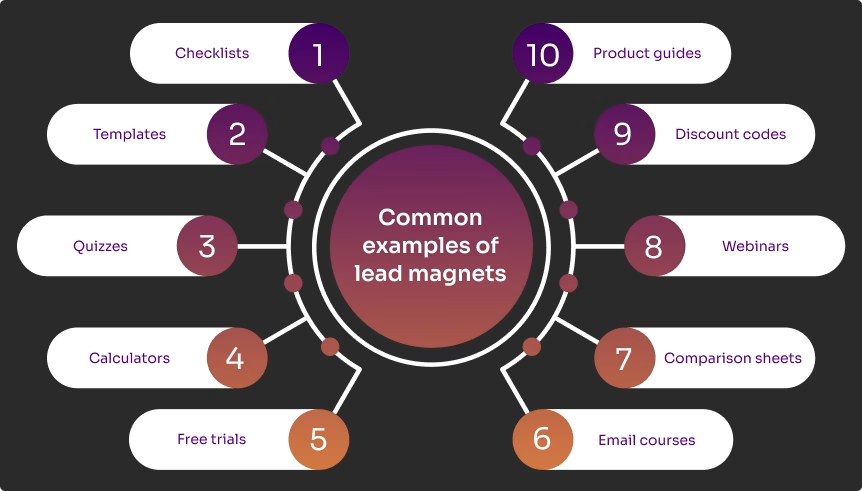
The format of a lead magnet is not the essence but only the format, the packaging. The real point is that a lead magnet should move someone one step closer to making a confident decision.
For SaaS (software as a service) businesses, that decision might be booking a demo, starting a free trial, or understanding how the software fits into their workflow. For e-commerce businesses, that decision might be choosing the right product, trusting the brand, or trusting the brand enough to make the first order.
What Makes a Lead Magnet Worth Signing Up For
A weak lead magnet usually communicates this: “Give us your information and we will send you something, we promise.” But a strong lead magnet says, “Here is a specific thing that will help you solve x (ideally the problem you came here with).”
The best lead magnets have five key features:
- They Are Specific
Example: “30-day onboarding email sequence for B2B SaaS”.
- They Create Value Fast
The user gets something useful within minutes, not after reading a 3000-word essay.
- They Match Buyer Intent
The user that just discovered the product needs different content than an established one.
- They Naturally Connect to a Product or Service
The lead magnet attracts truly interested users.
- They Make Follow-up Easy
A quality lead magnet gives clues about what the user wants and needs.
Best Lead Magnet Examples for SaaS Brands
SaaS buyers usually need more than a quick offer before they share their details. They want proof that your product can solve a real problem of theirs, fit into their workflow, and make their day easier in a way they can actually notice and measure.
Free Trial or Freemium Access
For SaaS, the product itself can be the best lead magnet. A free trial works well when users can understand the value quickly. Freemium works well when the product has regular use cases and a clear reason to upgrade later. Do not simply open and run the product and hope users figure it out; guide them toward one meaningful result.
Good fit for:
Project management tools, analytics platforms, CRM software, design tools, automation tools, scheduling apps, and productivity software.
ROI Calculator
An ROI calculator helps users estimate how much money, time, or effort they could save by using your product.
For example, a SaaS company selling customer support software could create a calculator that estimates saved hours based on ticket volume, average handling time, and team size. Keep the inputs simple. If the calculator asks for too much information, people will leave. Ask only for the data needed to create a useful estimate.
Good fit for:
B2B SaaS, finance tools, HR software, customer support platforms, automation products, sales tools, and operations software.
Checklist for Solving a Specific Problem
Checklists are simple, but they work because people like knowing they are not missing something important.
A SaaS cybersecurity company might offer a “SaaS Security Audit Checklist.” An onboarding platform might offer a “New User Onboarding Checklist”. A billing tool might offer a “Subscription Revenue Cleanup Checklist.” And a web design agency can gain an advantage from the “Choosing the Best Web Design Agency Checklist”. It gives users structure and needed guidance. It also positions the brand as helpful before asking for a sale.
Good fit for:
SaaS brands targeting managers, founders, marketers, sales teams, developers, HR teams, finance teams, or operations teams.
Template Library
Templates are one of the most useful SaaS lead magnets because they save users time. Templates help people act immediately. They also create a natural connection between the user’s current workflow and your product.
Examples of useful templates:
- Email templates
- Proposal templates
- Reporting templates
- Onboarding templates
- Sales call scripts
- Content calendar templates
Good fit for:
CRM platforms, marketing tools, project management software, sales enablement tools, customer success software, and HR platforms.
Product Comparison Guide
Many SaaS buyers compare options before they speak with sales. A comparison guide helps them evaluate products more clearly. It helps buyers feel smarter. It also lets your brand shape the buying criteria in an honest and useful way. Do not make it a hidden sales pitch. Include fair criteria, possible trade-offs, and situations where different solutions make sense.
Good fit for:
SaaS brands in competitive categories where buyers compare multiple vendors before choosing.
Webinar or Workshop
A webinar works best when the topic is practical and specific. They also give users a chance to trust the people behind the company.
Good fit for:
B2B SaaS, complex products, higher-ticket subscriptions, and tools that require education before purchase.
Best Lead Magnet Examples for E-commerce Brands
E-commerce shoppers usually need help making a confident choice before they buy. The right lead magnet can reduce hesitation, answer product questions, and give them a clear reason to trust your brand with their first order.
According to Baymard Institute research, 19% of respondents say they have abandoned the cart because they didn’t trust the website enough. With a solid lead magnet, those 19% could be purchasing from your website.
First Order Discount
This is the classic e-commerce lead magnet. A visitor gives their email in exchange for a discount on their first order. Make the offer feel connected to the product category, buying moment, or customer need.
Good fit for:
Fashion, beauty, home goods, pet products, food products, accessories, and lifestyle brands.
Product Finder Quiz
A product quiz helps shoppers choose the right item. A quiz makes the shopping experience easier and more personal. Use quiz answers to recommend products, not just collect emails. The result page should be useful even before the user buys.
Examples:
- “Find your perfect skincare routine”
- “Which coffee blend fits your taste?”
- “What size dog bed should you buy?”
- “Which running shoe type fits your training style?”
- “Build your home office setup”
Good fit for:
Beauty, fashion, wellness, supplements, furniture, pet products, food and beverage, fitness products, and gift stores.
Buying Guide
A buying guide helps shoppers understand what to look for before purchasing. It reduces doubt. The more informed the shopper feels, the less likely they are to abandon the purchase. Include comparison tables, decision tips, product use cases, and common mistakes. Avoid making it only about your products.
Good fit for:
Products with sizing, materials, ingredients, technical features, safety considerations, or higher price points.
Gift Guide
Gift guides are useful because shoppers often buy for someone else and need help choosing. It reduces decision stress and helps shoppers find products faster. Organize by person, occasion, price range, or personality type. “For the friend who has everything” is more interesting than a plain product list.
Good fit for:
Lifestyle brands, home goods, food and beverage, beauty, fashion, books, accessories, and seasonal e-commerce stores.
Early Access List
An early access lead magnet gives subscribers first access to new products, restocks, limited drops, or seasonal collections. It creates a reason to subscribe beyond a discount. It also works well when demand, scarcity, or timing matters. Be clear about what subscribers get. “Join the list” is weak. “Get first access to our spring collection before it goes public” is stronger.
Good fit for:
Fashion drops, collectibles, beauty launches, limited-edition products, seasonal collections, and creator-led brands.
Bundle Builder or Routine Builder
A bundle builder helps shoppers combine products based on their needs. It increases usefulness for the customer and can also raise average order value. Explain why each product belongs in the bundle. People are more likely to buy when the combination makes sense.
Good fit for:
Beauty, wellness, food, pet care, home office, fitness, hobby products, and subscription boxes.
Lead Magnet Ideas by Funnel Stage
Not every lead magnet should target the same type of visitor. A person discovering the brand needs something different from someone comparing products or almost ready to buy.
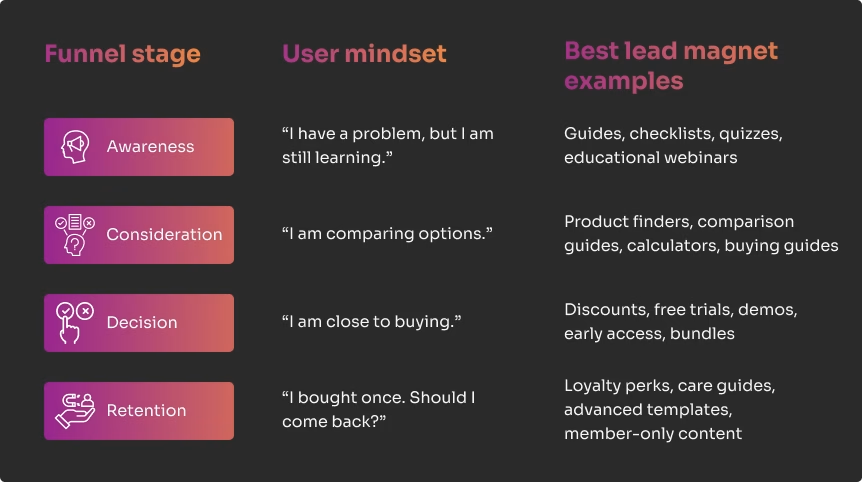
This is where many brands make a mistake by creating one lead magnet and showing it to everyone. A better approach is to match the offer to the visitor’s intent.
For example, a first-time blog visitor might respond well to a helpful checklist. A product page visitor may prefer a quiz, size guide, or discount. A pricing page visitor for SaaS may care more about an ROI calculator or comparison guide. It’s all about what you are selling and where the potential customer is in the funnel.
According to statistics compiled by SalesCommerce, 29% of respondents state their biggest pain point is the lack of digital interaction between buyers and sellers. A strong lead magnet should feel less like a generic offer and more like the next helpful interaction your buyer needed.
SaaS vs E-commerce Lead Magnets: The Difference
SaaS lead magnets usually need to explain value, reduce complexity, or prove business impact.
E-commerce lead magnets usually need to reduce hesitation, help with product choice, or create buying motivation.
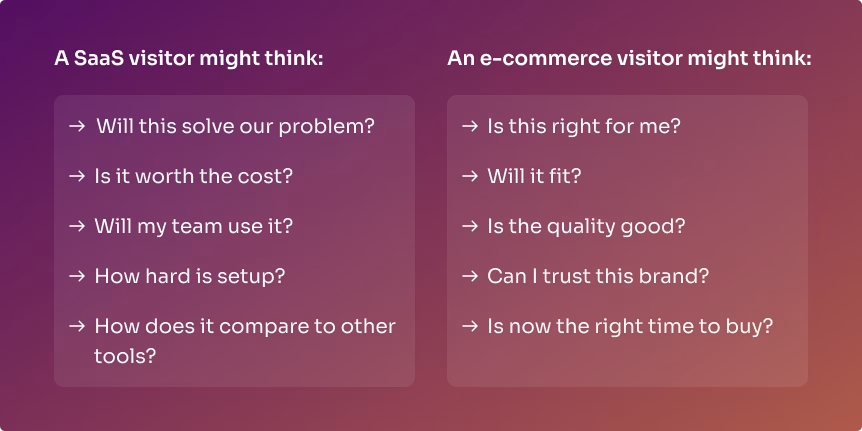
The lead magnet should answer the question already sitting in the customer’s mind, and that is what separates a strong lead magnet and a weak one.
How to Choose the Right Lead Magnet
We’ve already covered that not every lead magnet is for every industry, but what’s also true is that not every format fits your business and users. Here are some questions you can ask before choosing a lead magnet format.
1. What is the visitor worried about?
If they are worried about price, a discount might help.
If they are worried about making the wrong choice, a quiz or guide may work better.
If they are worried about internal approval, a calculator or comparison sheet may bea better option.
2. What Action Should Happen Next?
The lead magnet should point toward that next action. Do you want the user to book a demo, start a trial, add to cart, buy a bundle, or return later?
3. What Data Would Help You Follow Up Better?
A basic email popup gives you an email address. A quiz or calculator can tell you product preferences, pain points, budget range, business size, or buying stage.
That information can make email follow-up much more relevant.
4. Can the User Get Value Quickly?
A lead magnet that takes too long to understand creates friction. The faster someone sees value, the better your lead magnet will perform.
Common Lead Magnet Mistakes to Avoid
Even a good lead magnet idea can fail if the offer feels unclear, too generic, or disconnected from what the customer actually needs. Before you build one, it helps to know the common mistakes that hurt conversions and attract the wrong leads.
Offering Something Too Broad
“Free marketing guide” sounds forgettable.
“Landing page checklist for SaaS demo bookings” is specific.
Specific lead magnets attract better leads because they speak to a real situation.
Asking for Too Much Information Too Soon
If the offer is small, keep the form small. Asking for a phone number, company size, job title, budget, and timeline for a basic checklist can hurt conversions.
Save more profound questions for higher-intent offers like demos, consultations, or detailed assessments.
Making the Lead Magnet Disconnected From the Product
A random giveaway might grow your email list, but it can also attract people who will never buy. The best lead magnets bring in people who are likely to care about what you sell.
Forgetting the Follow-up or Making it Generic
The lead magnet is not the finish line, but the start of the relationship with a potential customer.
After someone downloads, subscribes, or completes a quiz, the next email should continue the same conversation. If they downloaded a pricing checklist, do not send a generic brand story first. Send something that helps them take the next useful step.
Where Web Design and Development Matter
A lead magnet is not only a marketing idea. It also depends on execution.
The offer needs to load quickly, look trustworthy, work well on mobile, connect with email tools or CRM systems, and guide the user toward the next action. For e-commerce, that may mean connecting a quiz result to product recommendations. For SaaS, it may mean sending calculator results to a sales team or showing a clear demo CTA after the result.This is why lead magnets work best when strategy, design, development, and marketing are planned together.
The idea gets attention, but the experience and the right team turn that attention into a real opportunity.
Final Thoughts
The best lead magnets are not random freebies. They are small, useful bridges between what the customer needs and what your business offers.
For SaaS brands, strong lead magnets help users understand value, prove impact, and move closer to a trial or demo. For e-commerce brands, they help shoppers choose faster, trust the brand, and feel more confident buying.
Start with one clear audience, one specific problem, and one useful outcome. That is usually better than building a large resource no one really asked for.
And once the lead magnet is live, keep improving it. Watch the conversion rate, lead quality, email engagement, and sales impact. A good lead magnet should not only grow your list. It should help the right people take the next step.
If you want your lead magnet to do more than sit behind a form, Ginger IT Solutions, a full-service digital agency, can help you build the website, landing page, e-commerce experience, and marketing system around it so every click has a clearer path to becoming a lead, sale, or customer.