
We often hear people treat ‘copywriting’ and ‘content writing’ as the same thing, and it’s okay if you are not familiar with marketing. But even marketers and recruiters do it, and treating them as interchangeable leads to real problems such as hiring the wrong person, publishing the wrong piece of content, and wondering why your efforts don’t get results you want.
In this article, we will once and for all clarify the difference between copywriting and content writing.
The Core Difference, In Simple Terms
Copywriting is writing that sells the product, service, or idea. Its job is to get someone to take a specific action right now, or very soon. Every word in a piece of copy has one goal, and it’s to move the reader forward. A call to action is always a verb: click, buy, call, sign up, etc.
Content writing is writing that informs, teaches or entertains the reader. Content writing has the job of building trust over time through its content. A blog post just like this one, a newsletter, a comparison article, a user guide, and an explainer article are all examples of content. The outcome is not immediate, as the game is more of a marathon than a sprint.
Here is a simple test to determine if it’s copywriting or content writing: does the piece have a clear call to action, and is driving that action the whole point of the piece? If the answer is yes, it’s a copy. If the piece is there to give value and the call to action is secondary, it’s content.
What Copywriting Actually Looks Like
Think of the last time a headline made you click something you otherwise wouldn’t, or a product landing page that made you reach for your credit card faster than you expected. That was copywriting in action.
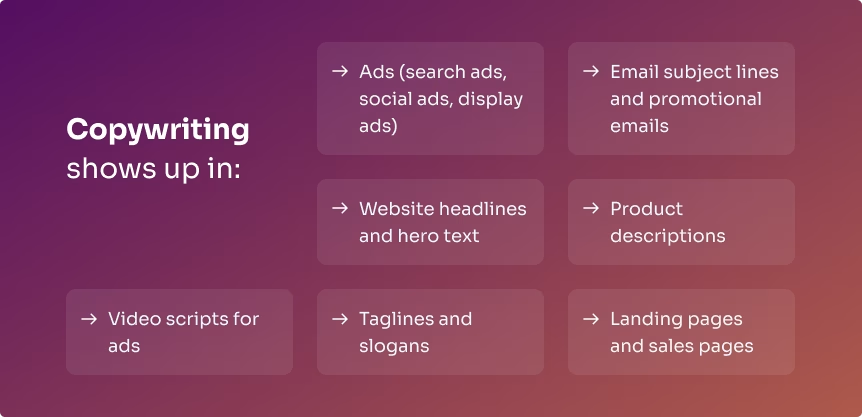
Good copywriting is simple; it looks easy, it has a flow. However, behind every punchy headline is a writer who understands the reader’s fear, desire, objection, or goal, and communicates directly to it.
Copywriters mostly study human psychology around the mechanisms of decision-making and persuasion frameworks. They know why some CTAs convert better than others, and they know how to recognize what works best.
The copywriter’s job is not to be clever (though that is a plus) but to be clear and persuasive. In copywriting, creativity serves conversions, not the other way around.
What Content Writing Actually Looks Like
Content writing is what you are reading right now: a blog post that answers a question someone searched for. It’s the guide that helps buyers understand their options and the newsletter that keeps an audience interested week after week.
Content writing is not outwardly promoting a product but rather explaining the benefits and comparing it to others on the market.
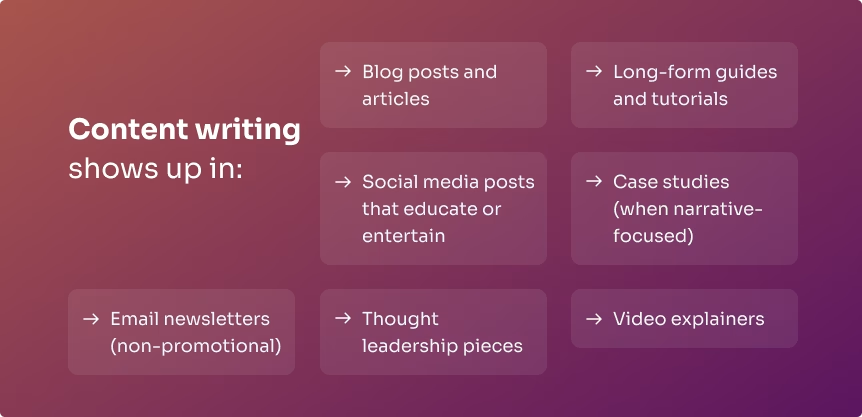
A content writer’s primary job is to inform and to do so in a way that elicits trust in the brand behind the content. The sales aspect of a piece of content is indirect but not lacking. You publish content that can help and educate; people find it, and after some time, they associate your brand with expertise, which will make some of them choose to buy from you.
Content writing is tightly bound to SEO, and when done well, it brings people to your website through organic search. If you are lucky enough to work alongside an SEO specialist, they will write a detailed content brief with keyword targets, search intent analysis, word count guidelines, target audience, sources, tone of voice, and other details that will make your content perform.
Two Different Ways of Thinking
A copywriter starts writing a copy, asking: Who is this person? What do they want? What stands between them and action? And how do I move them? Every word is a bridge between the reader’s current state and the action the brand needs them to take.
A content writer enters a piece thinking, ‘What does this person need to know, and how do I make it engaging enough for them to remember?’ The goal is for the reader to leave better equipped than they arrived.
The difference shows up in how they work. A copywriter might spend three days on a single landing page because certain angles do not do the same thing to the same person. A content writer might spend three days going deep on a topic, adding context, examples, and nuance, because shallow coverage is worse than no coverage at all.
In copywriting, you usually achieve the goal by compressing, and in content writing, you achieve it by expanding on the topic.
Why Brands Need Both and Why the Difference Matters
A common mistake we see brands make is hiring one writer to do everything: blog posts, ad copy, product pages, and email campaigns. While some writers can do it all, it’s a stretch, and usually the output suffers.
A content writer can write a beautiful, informative landing page, but without understanding conversion, funnel stages and target audience, the landing page will not convert. Content writers tend to focus on features when the real action lies in benefits and how the product can solve a problem the reader doesn’t have yet.
The same goes the other way. A copywriter who doesn’t understand content will write blog posts that feel too promotional, and the reader will stop trusting the brand.
Both writers are working with words, but the goal, the structure, the tone, and the measurement of success are all different. Recognizing the difference between the strengths of a copywriter as opposed to a content writer will help you get better results.
Where the Two Overlap
There are areas where copywriting and content writing genuinely overlap, and that is fine. They don’t always need to be strictly separated.
Email newsletters are a good example of this overlap. A newsletter can be mostly content (teaching, sharing ideas) with a soft pitch or a call to action at the end. This writing direction is a bit of both content and copywriting. In today’s search environment, it often also involves carefully editing AI-generated content so it sounds more useful, natural, and persuasive.
Case studies mix both all the time. The narrative sections are content. The persuasive framing and the call to action are copy.
Social media depends entirely on the post. A thread explaining something is content. An ad, even if it looks like organic content, is copy.
The overlap is not a problem as long as you know what is the goal of each piece. Confusion only happens when you lack a clear answer to the question: what do I want the reader to do when they finish reading?
How To Hire the Right Person
A statistic gathered from Typeface claims that blogging, SEO, and website content will continue to deliver the highest ROI for marketers. That said, if you are a business owner or marketer trying to figure out who to hire for your content marketing efforts, here is a practical way to frame it:
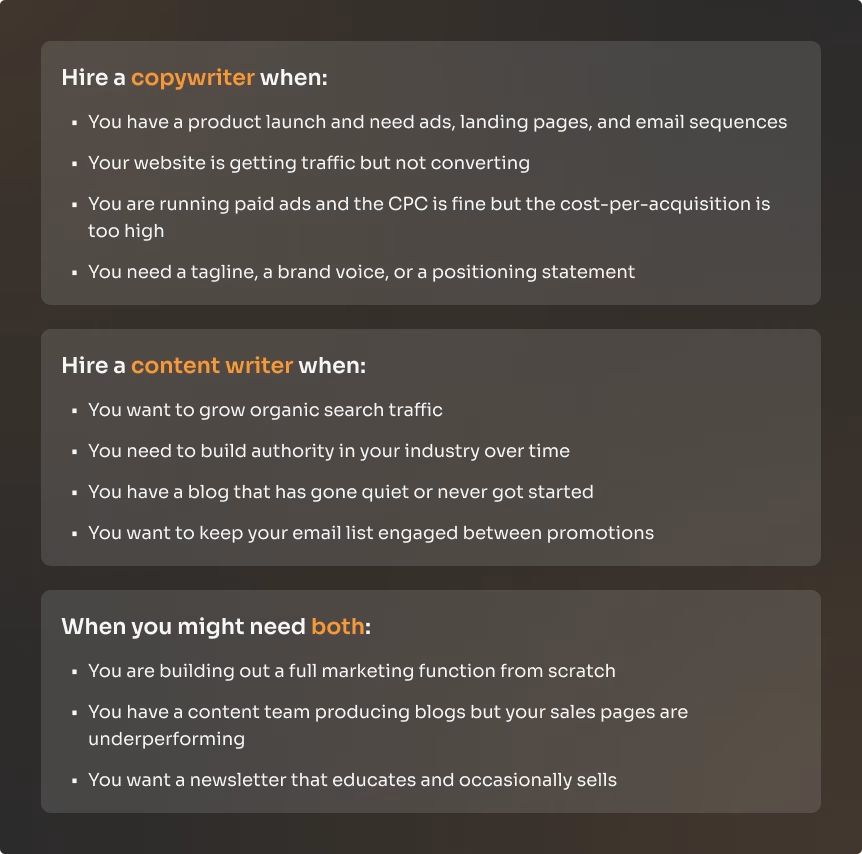
Some writers do both very well. The fastest way to find out is to skip the resume and go straight to the portfolio and look for range. A copywriter’s landing page should feel nothing like a content writer’s blog post. If their work all sounds like one thing, it probably is.
What Good Looks Like in Each
Good copywriting is invisible. You do not notice the mechanics; you just find yourself wanting to take action. The best copy feels like someone finally explained exactly what you needed to solve the problem you have and made it easy to say yes.
Good content writing leaves you feeling more informed. You came with a question and left with an answer. You might not remember the brand right away, but you trusted the source. Over time, that trust adds up to something.
Both require a genuine understanding of the target audience and skill with language. The difference is in the goal: copywriting is optimized for action, content writing is optimized for understanding.
Keep this distinction clear and you will make better decisions about briefs, strategy and content you publish.
Conclusion
Copywriting and content writing are related but separate crafts.
Copywriting sells. Content writing educates. One is measured in clicks and conversions. The other is measured in traffic, time-on-page, and long-term trust.Content marketing builds trust, and copywriting converts it. A business that understands the difference stops asking one to do the other’s job, knowing it will not be as effective.
Ginger IT Solutions can help you close that gap with one coherent marketing strategy that connects content, copy, and SEO into a clear system built to attract, inform, and convert.