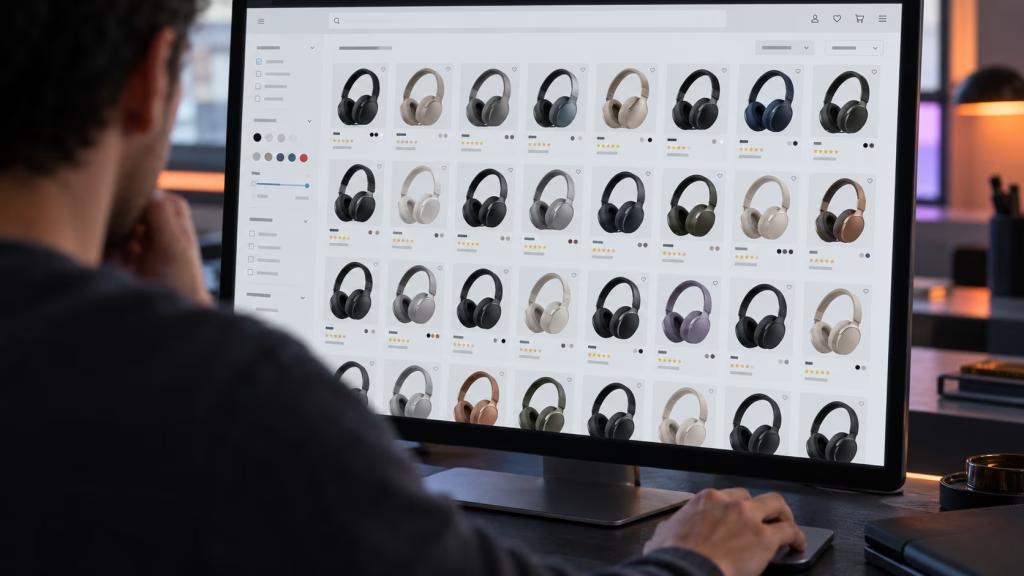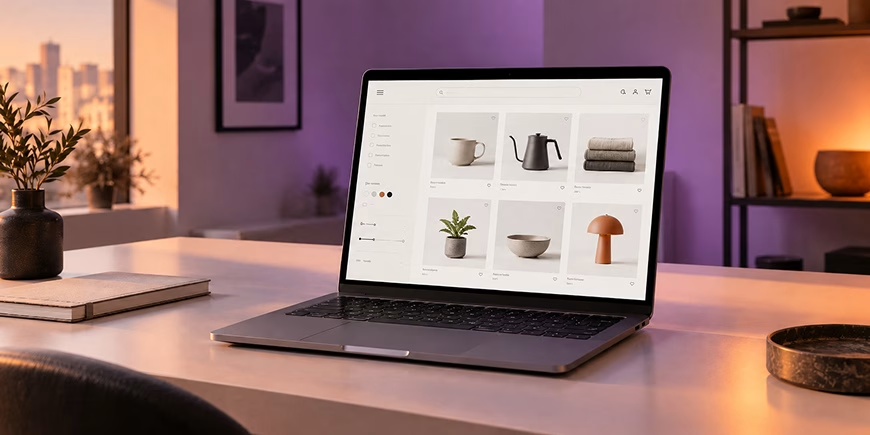
Most online stores do not lose sales because the product is weak. They lose sales because customers cannot confidently evaluate the product online.
Someone opens a product page, zooms in, checks the gallery, looks for scale, texture, color, movement, or context, then hesitates. In a physical store, they would pick the item up, feel the material, compare it with another option, or ask a salesperson. In ecommerce, the screen becomes the entire shopping experience.
This is why strong product visuals matter. They shape the first impression, but they also influence trust, perceived value, usability, SEO engagement, and product understanding.
Blurry images lower perceived quality. Slow galleries frustrate mobile users. Inconsistent layouts create doubt about the business behind the product. Meanwhile, online stores with clear, consistent, and useful visual systems make buying decisions easier.
From an SEO and UX/UI perspective, this matters because product pages need to satisfy intent, hold attention, support mobile performance, and help users move through the page with less friction.
That intersection between SEO, product visuals, UX/UI, and conversion strategy is where modern ecommerce performance is won or lost.
Why Product Visuals Sell Faster Than Copy

Users process visuals faster than text. That is not a trendy marketing phrase, it is basic human behavior.
A shopper looking at a chair online is not starting with the product description. They ask silent, practical questions: Will this look too bulky in my living room? Is the fabric soft or stiff? Does the color look expensive or slightly sad? Can I imagine this in my space?
If product visuals do not explain the product clearly enough, the copy may never get the chance to do its job.
Product descriptions, technical details, FAQs, and SEO content still matter. But product visuals create the first layer of understanding that helps shoppers decide whether the details are worth reading.
Common ecommerce gaps show this clearly:
- A furniture product photographed only on a white background gives no sense of scale.
- Clothing without lifestyle imagery leaves uncertainty about fit and movement.
- Luxury products with poor lighting instantly feel less premium.
Baymard Institute’s ecommerce UX research has repeatedly shown that users rely heavily on product images to evaluate items online, especially on mobile, where space is limited and patience is even more limited.
The interesting part is that strong product visuals rarely work because they are “beautiful.” They work because they answer questions quickly. Good ecommerce visuals communicate size, texture, context, functionality, quality, use case, and emotional fit.
That last part matters more than many businesses realize. People are not only asking, “What is this?” They are asking, “What would this feel like in my life?”
Product Visuals Are SEO Assets Too
Many ecommerce businesses still separate SEO strategy from product presentation, even though the two directly influence each other.
A common ecommerce scenario looks something like this: a business invests heavily in SEO, improves rankings, starts attracting more traffic, then quietly loses those users because the product pages fail to create confidence. The visitors arrive, scroll for a few seconds, hesitate, and leave because the page experience feels incomplete.
Search engines notice these patterns.
Modern ecommerce SEO depends heavily on engagement quality, usability, page performance, and search relevance. Product visuals directly influence all four.
Strong visuals tend to improve:
- Time on page
- Interaction depth
- Product engagement
- Return visits
- Conversion rates
Weak visuals create the opposite effect. They increase:
- Bounce rates
- Exit rates
- User frustration
- Abandoned sessions
These patterns can suggest that a page is not satisfying user intent very well.
Google increasingly evaluates whether pages genuinely help users make decisions. A product page with poor imagery often struggles to compete against stores offering clearer, faster, and more useful experiences.
How Strong Product Visuals Improve Conversions

Conversion optimization in ecommerce often comes down to one thing: reducing uncertainty.
A shopper is rarely asking only, “Do I like this?” They are asking a dozen smaller questions at the same time. Will it look the same in real life? Is the material good? Is the color accurate? Does it feel worth the price?
Strong product visuals help shoppers evaluate products faster before the session turns into abandonment.
This is why high-performing online stores rarely rely on one polished product image. They build a visual experience around the product, and each element serves a purpose.
- Multiple angles help users understand shape and proportion.
- Close-up shots reveal texture and quality.
- Lifestyle imagery helps customers imagine ownership.
- Short videos show movement, function, or scale in a way static images cannot.
- Color variation previews reduce doubt before users reach checkout.
- Contextual imagery helps products feel more real and less abstract.
Mobile ecommerce behavior is even more aggressive. Shoppers compare quickly, switch tabs easily, and abandon pages without a dramatic goodbye. Weak product visuals can lose them in seconds.
There is also an important psychological layer here. Clear product visuals lower perceived risk. They make the product feel more real, more understandable, and easier to trust.
The best product visuals reduce those doubts before users consciously articulate them. That is why ecommerce visuals should never be evaluated purely through aesthetics. Their real job is functional clarity.
The Business Cost of Weak Product Presentation
Weak product presentation does not only affect how a page looks. It can quietly affect business performance across the whole ecommerce funnel.
When customers cannot clearly understand a product, they ask more questions, compare longer, abandon carts more often, and return items more easily. That creates costs beyond the lost sale.
Poor product visuals can lead to:
- More customer support questions
- Higher return rates
- Lower add-to-cart rates
- Weaker paid campaign performance
- Lower average order value
- More abandoned carts
- Reduced repeat purchases
This is where product presentation becomes an operational issue, not just a design issue.
If a store is paying for traffic but the product page makes products difficult to evaluate, the business is simply sending more users into the same friction. Better visuals, clearer layouts, and stronger product context often improve the value of traffic the store already has.
Product Visuals, UX/UI Design, and Customer Trust
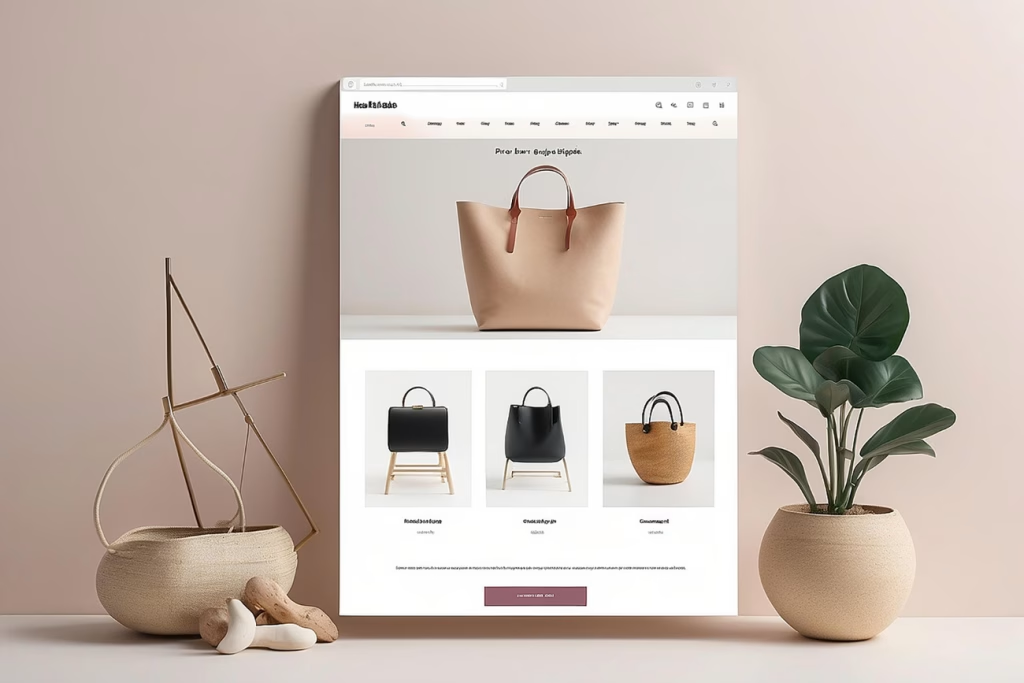
A strong product photo can still underperform if the experience around it feels difficult to use. This is where UX/UI design becomes critical.
Product visuals need the right structure around them. Even excellent photography can underperform if galleries are difficult to navigate, mobile layouts feel cramped, zoom interactions break, images shift during loading, or product information competes with unnecessary distractions.
Strong ecommerce UX/UI design helps users process information faster. Visual hierarchy guides attention toward the product first, then toward key actions like selecting variations, reviewing details, or adding items to the cart. Spacing, contrast, typography, and layout rhythm all influence how comfortably users move through the page.
Mobile-first design matters especially here. Product galleries should feel smooth to swipe, images should scale properly across devices, and call-to-action buttons should remain visible without interrupting the browsing experience.
High-performing online stores also rely on consistency. That includes:
- Predictable gallery layouts
- Clear call-to-action placement
- Proper contrast
- Mobile-friendly image scaling
- Consistent spacing systems
- Logical visual flow
The strongest ecommerce experiences rarely feel overloaded. They feel structured, clear, and easy to use.
Product Images Influence More Than Design
There is also the technical side of the conversation, which many online stores underestimate until performance problems start affecting rankings and conversions.
Large, unoptimized image galleries are one of the most common ecommerce issues today. A product page may look visually impressive on a designer’s desktop monitor but become painfully slow on mobile devices. Heavy animations, oversized image files, bloated themes, and plugin overload can quietly damage usability.
This is where ecommerce SEO becomes deeply connected to UX/UI design and development.
Product visuals influence:
- Core Web Vitals
- Mobile usability
- Loading speed
- Layout stability
- Crawlability
- Image indexing
Strong product imagery should support the experience, not slow it down.
Modern formats like WebP and AVIF help reduce file sizes significantly without hurting image quality. Lazy loading improves performance on image-heavy pages. Proper alt text and structured product schema help search engines better understand ecommerce content and improve accessibility at the same time.
Responsive image handling, CDN delivery, and properly configured srcset attributes also help online stores serve faster, device-appropriate images without sacrificing quality. For larger ecommerce websites, image sitemaps and optimized Merchant Center feeds can further improve how products appear across search and shopping environments.
Visual search is also becoming a bigger part of ecommerce discovery. Tools like Google Lens already allow users to search using images instead of words, and AI-powered search experiences increasingly combine image interpretation with traditional SEO signals.
That changes the role of product visuals completely. They are becoming search assets, not just design elements.
What High-Performing Online Stores Do Differently

High-performing online stores rarely treat product visuals as a random folder of images uploaded before launch. They treat them as a system.
You can usually feel this within seconds. A shopper moves from one category to another, and the experience still feels familiar. The photography style is consistent. Product cards look aligned. Image ratios do not jump around. The mobile gallery works smoothly. Nothing feels stitched together at the last minute.
That kind of consistency builds trust quietly.
Strong product presentation also extends beyond individual product pages. Category pages, collection layouts, product filtering systems, and mobile navigation all influence how easily users discover and compare products across larger ecommerce catalogs.
The strongest ecommerce stores also understand that clarity beats decoration. Their visuals are not boring. They are focused. Every image helps the customer make a better decision.
They usually rely on:
- Standardized photography guidelines
- Consistent aspect ratios
- Neutral product backgrounds
- Contextual lifestyle imagery
- Mobile-first image testing
- Optimized gallery interactions
- Fast-loading assets
- Strategic video placement
Importantly, they also understand when visuals should simplify instead of impress.
Many online stores overdesign product pages with excessive animations, auto-playing videos, distracting hover effects, complex transitions, and oversized visual elements. These features often hurt usability more than they help conversions.
The best product visuals answer questions before customers ask them. That should be the rule behind every ecommerce visual decision.
Practical Recommendations for Online Stores
A useful product visual audit does not have to start with a full redesign. Sometimes, the first step is simply opening a product page on mobile and asking, “Would I buy this if I knew nothing about the brand?”
If the answer is uncertain, start with the basics. These are usually the strongest starting points:
Product Photography
- Minimum 5 to 7 images per product
- Include close-up details
- Show scale/context where relevant
- Maintain consistent lighting
Product Videos
- Keep videos short
- Demonstrate actual use
- Prioritize mobile viewing
- Avoid overproduced brand commercials
Technical Optimization
- Use compressed modern image formats
- Implement lazy loading
- Add descriptive alt text
- Optimize for Core Web Vitals
UX/UI Improvements
- Simplify gallery navigation
- Improve mobile spacing
- Keep call-to-action buttons visible
- Reduce visual clutter
These changes may sound basic, but together they often improve the metrics that matter most: engagement, product confidence, add-to-cart rates, and conversions.
Why Partnering With a Professional Web Design Agency Matters
Many ecommerce businesses treat product visuals as a photography task. Take better photos, upload them, job done. Nice idea, but good visuals alone are not enough.
A product page is not just a gallery. It is a system. If the site architecture is messy, the mobile layout feels cramped, or the page speed collapses under heavy images, even excellent product visuals will struggle to do their job.
This is why experienced ecommerce teams approach product visuals strategically.
A professional web design agency looks beyond the image itself and evaluates how the full shopping experience works: product page structure, conversion flow, mobile usability, performance, SEO implementation, category architecture, visual consistency, and technical scalability.
That broader perspective matters because ecommerce performance problems rarely exist in isolation. For example:
- Slow image delivery affects SEO and conversions
- Poor mobile layouts reduce engagement
- Weak visual hierarchy lowers product comprehension
- Inconsistent imagery damages trust
- Bloated themes hurt Core Web Vitals
Partnering with web design experts helps online stores create product experiences that are visually persuasive, technically optimized, and easier for customers to navigate.
This becomes especially important for growing ecommerce brands managing larger catalogs, multiple categories, and competitive search environments.
Businesses investing in professional web design services often see the strongest results when design, SEO, web development, and UX/UI strategy work together from the beginning, instead of being treated as separate projects.
Product Presentation in Action: The Miter Example
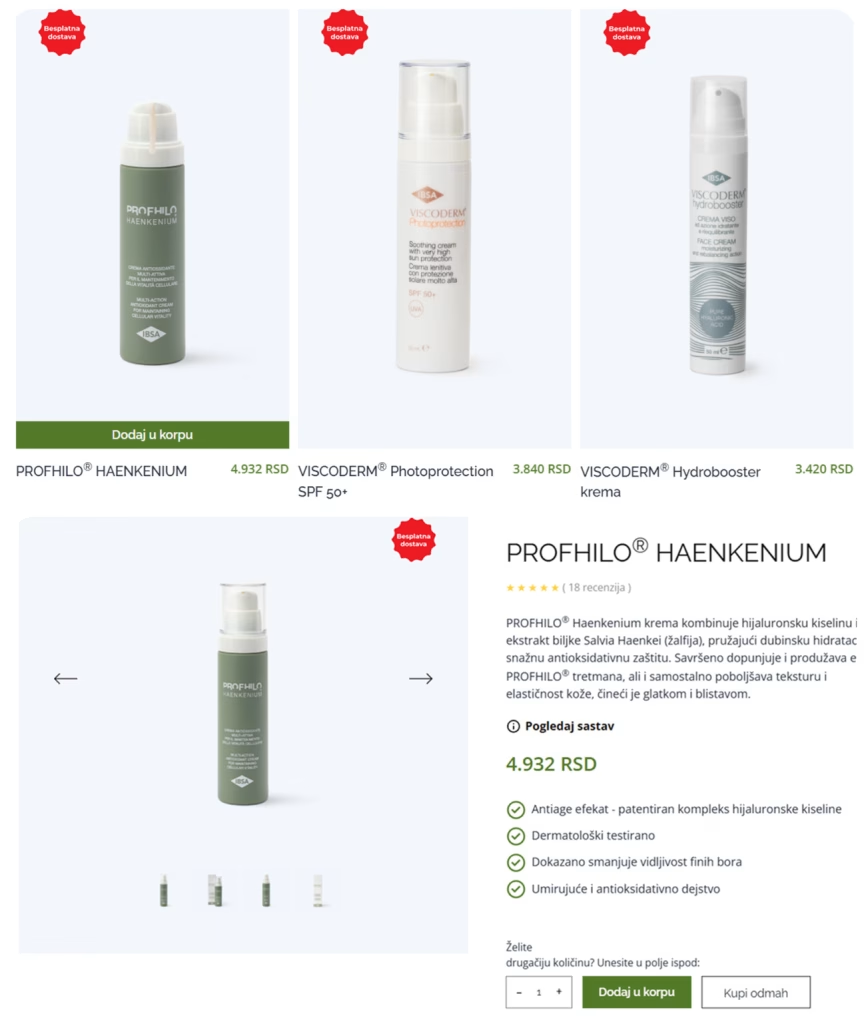
A strong example of this can be seen in Ginger IT’s work on Miter International, where the ecommerce experience was designed around clarity, usability, and product presentation rather than visual overload.
The project focused heavily on improving how users explored products across categories, with cleaner product structures, more consistent visuals, and a smoother browsing experience across devices. Product categories were structured more clearly, gallery consistency was improved across the catalog, and mobile browsing interactions were simplified to reduce friction during product discovery.
The store experience was built as a connected system where UX/UI design, performance optimization, and ecommerce functionality worked together.
This helped create a shopping experience that felt more premium, easier to navigate, and more trustworthy, especially on mobile devices where product presentation often determines whether users continue browsing or leave within seconds.
The project also highlights an important ecommerce principle: strong product visuals work best when supported by fast-loading pages, clear visual hierarchy, intuitive navigation, and consistent category architecture. Without that foundation, even excellent photography can struggle to convert.
How AI Search and Visual Discovery Are Changing Ecommerce
Search behavior is evolving quickly. Customers now discover products through AI recommendations, social platforms, image search, visual matches, and multimodal search experiences where text, images, and context work together.
That shift changes the role of product visuals.
For online stores, imagery is no longer just there to support the product page. It helps search systems understand what the product is, how it looks, where it fits, and why it may be relevant to a shopper’s intent.
AI-driven search environments increasingly combine product descriptions, structured data, reviews, images, behavioral signals, and merchant information into a broader picture of product quality and relevance. In that context, weak visuals can limit visibility before users even reach the site.
This is where ecommerce SEO starts to look more visual, more contextual, and more connected. Product visuals support discoverability, search relevance, AI interpretation, merchant feed quality, and user confidence at the same time.
Google’s search ecosystem continues moving toward richer shopping experiences where visuals, structured data, and usability work together. Businesses preparing for the future of ecommerce SEO should treat product visuals as long-term search infrastructure, not temporary marketing assets.
The Experience Around the Product Sells the Product
Strong product visuals help online stores sell more because they make products easier to understand, compare, and trust.
The product page has to make the buying decision feel clear. When visuals are fast, consistent, and useful, they support trust, engagement, SEO performance, mobile usability, conversions, and even return behavior.
The best ecommerce brands understand that product visuals do not work alone. They are part of a larger system that includes UX/UI design, technical performance, ecommerce SEO, conversion strategy, and customer trust.
This is exactly why ecommerce projects at Ginger IT Solutions are approached as complete digital experiences rather than isolated design tasks. Product presentation, usability, performance, SEO, and conversion flow all influence how customers experience a store and whether they feel confident enough to buy.
This is no longer about adding nicer photos to product pages. It is about building shopping experiences that help people move from curiosity to confidence with less friction.
In modern ecommerce, product presentation is no longer separate from performance. It is part of the buying experience itself.