


Despite investing resources in digital marketing, publishing blog posts, running paid ads, and improving website design, many businesses still struggle with conversions. Their digital marketing efforts get them traffic, but users don’t get to the final action before they bounce. This problem is usually because there is a lack of understanding of how website users actually move from first interaction to final decision.
Customer journey mapping here becomes essential. It helps businesses understand the full decision-making process a potential customer or a client goes through, from the moment they need a problem solved to researching solutions, comparing options, and finally taking action. Different needs, questions, and expectations shape each stage of the customer journey.
It’s easy for content marketing efforts to become disconnected without a clear customer journey map. Your content may be valuable, but it won’t perform as well without positioning based on the customer’s place in the digital marketing funnel.
By mapping the customer journey and aligning it with the digital marketing funnel, businesses can create more relevant content, deliver better user experiences, and guide prospects more naturally toward conversion. In practice, this means fewer missed opportunities, stronger engagement, and a more strategic use of content marketing as a growth driver.
In this blog post we will clarify what a customer journey map is and how it connects to the decision-making process and digital marketing funnel.
What Is a Customer Journey Map
A customer journey map is a visual representation of how a potential customer interacts with your brand across different stages, from the first point of awareness to the final decision and after. A customer journey map outlines key touchpoints, actions, motivations, and challenges a user experiences while moving through the decision-making process.
A well-developed journey map typically includes:
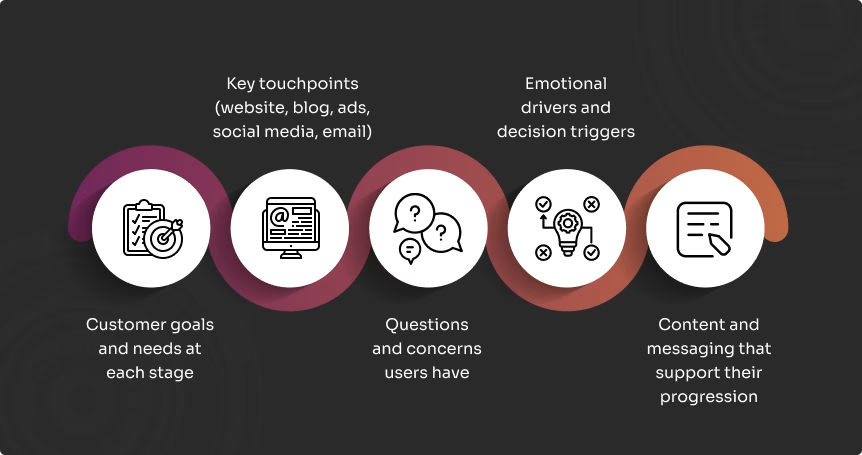
Different types of content serve different purposes depending on where the customer is in their journey. For example, awareness-stage users don’t respond to sales-focused content, while the ones in the decision stage of the funnel need content that builds trust and gives them proof.
The customer journey addresses a crucial question: what does the customer truly experience before becoming a client?
A customer journey map puts the user first by highlighting their needs and goals, rather than on what the business wants to communicate. It helps you understand how people discover your brand, what information they look for, what actually influences their decisions, and where potential problems with your proposition are.
Customer Journey Map VS Marketing Funnel: Key Differences
Despite often being thought of as interchangeable, a customer journey map and a marketing funnel are not the same.
The digital marketing funnel is a structured model that represents the stages a customer moves through from a business perspective, typically awareness, consideration, and decision. It focuses on guiding users progressively toward conversion.
A customer journey map is built from the customer’s perspective. It captures real behaviors, expectations, and experiences across every interaction with your brand.
The marketing funnel shows the path to conversion, and the customer journey map explains why customers move forward, hesitate, or drop off at each stage.
The distinction between these two is important for content marketing. A funnel tells you where to place content, but a journey map tells you what content your audience actually needs and why it matters to them.
Customer Journey Mapping in Digital Marketing: Why It Matters
Integrating customer journey mapping into your digital marketing strategy can make it even more effective.
Customer journey mapping connects user intent with marketing execution, making them work in unison to push the user toward a decision. Businesses that don’t engage in creating a customer journey map often create content based on assumptions rather than actual customer behavior.
When you understand the journey a customer takes through your content, your marketing tactics become more targeted and more efficient. Rather than creating generic content and making assumptions, you create assets that align with the user’s mindset at every stage of the funnel. Following a user map will eventually lead to higher engagement and an increase in conversion rates.
One of the biggest advantages is improved alignment between channels. Customers today rarely convert after a single interaction. Instead, consumers may find your brand through search, blog material, browsing your website, comparing competitors, and returning later via retargeting or email. Journey mapping helps you see how these touchpoints work together.
The Hidden Gap Between Traffic and Conversions
Many companies focus heavily on attracting traffic but overlook what happens immediately after users land on their website. This creates a disconnect between marketing efforts and actual business results.
We see marketing teams often celebrate impressions, clicks, and sessions, yet fail to analyze whether the content, messaging, and page structure actually support the next logical step in the customer journey.
If a user arrives with awareness-stage intent and is immediately pushed toward a sales-focused call to action, the experience might feel unnatural. And if a decision-stage visitor only finds generic educational content, they may bounce due to a lack of clarity or not enough trust signals.
Why Users Leave Without Taking Action
Even when traffic is relevant and content is well written, conversion gaps usually appear because the user’s intent and the stage of their decision process are not properly aligned with what they see next.
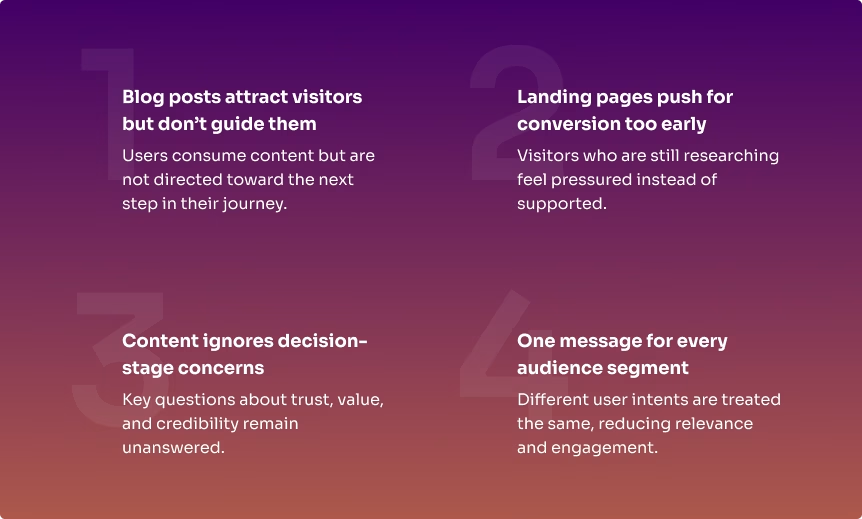
Different user intents are treated the same, reducing relevance and engagement.
Customer journey mapping helps close this gap by determining and revealing where users lose interest, what information is missing, and which content formats can move them forward. When content is aligned with the journey, it becomes a strategic tool that supports the entire decision-making process.
Behind the Customer Decision-Making Process
Every customer goes through a structured decision-making process before choosing a service or solution, even if they aren’t aware of that process while it’s happening. Understanding this is essential for building a content marketing strategy that resonates with real user needs, and brings results.
While the exact path may vary depending on the industry or service, most user journeys follow a predictable pattern driven by problem awareness, research, evaluation, and trust-building.
The 5 Key Stages of the Customer Decision Journey
1. Awareness: Problem Recognition
At this stage, the customer realises they have a problem or a need. They are not looking for a specific provider yet. Instead, they search for educational information, insights, and general solutions to the problem, hoping to figure it out.
Content such as blog articles, guides, checklists, and informational resources performs best in this stage because users are exploring, not yet buying.
2. Consideration: Research and Evaluation
Once the problem is clearly defined, the customer begins comparing different solutions. They look for deeper insights, expert content, and explanations that help them understand available options.
Case studies, long-form articles, and comparison content become highly influential at this stage.
3. Decision: Vendor Evaluation
In the decision stage, the focus shifts from “What do I need?” to “Who should I trust?” Users evaluate credibility, expertise, proof of work and results.
Trust signals such as testimonials, portfolios, UGC and case studies play a major role in reducing hesitation.
4. Conversion: Action
At this stage, the customer takes a specific action, such as booking a consultation, requesting a quote, making a call, or making a purchase. What significantly increases the likelihood of conversion is clear messaging, strong calls to action, and relevant content aligned with the user’s prior research.
5. Retention: Post-Purchase Experience
The journey does not end after the purchase has been made or a meeting booked. Post-conversion experience influences long-term loyalty, referrals, and client retention.
Content that supports onboarding, education about the product or a service, and ongoing engagement will help strengthen customer relationships and brand trust over time.
By mapping these stages, businesses have a chance to gain a clearer understanding of how users make decisions. Customer journey mapping allows content marketing efforts to support them at every step instead of focusing only on acquisition.
How Customer Journey Mapping Shapes Content Marketing Strategy
From guesswork to structured content strategy is where customer journey mapping can take your digital marketing strategy. Instead of producing content based on trends or assumptions, businesses can consistently create content that directly responds to user needs at each stage of the funnel.
Customer journey mapping helps identify what type of content is needed, when it should be delivered, and what role it plays in moving the user forward. Among other things, this leads to more purposeful blog topics, better-structured service pages, and messaging that feels relevant, always. Over time, this results in stronger engagement, more qualified leads, and a content ecosystem that actively supports the customer’s decision-making process.
How to Create a Simple Customer Journey Map (Step-by-Step)
You don’t need a complex framework to get value from customer journey mapping. Here’s a simple step-by-step framework that can guide you toward a clearer understanding of your customer’s journey.
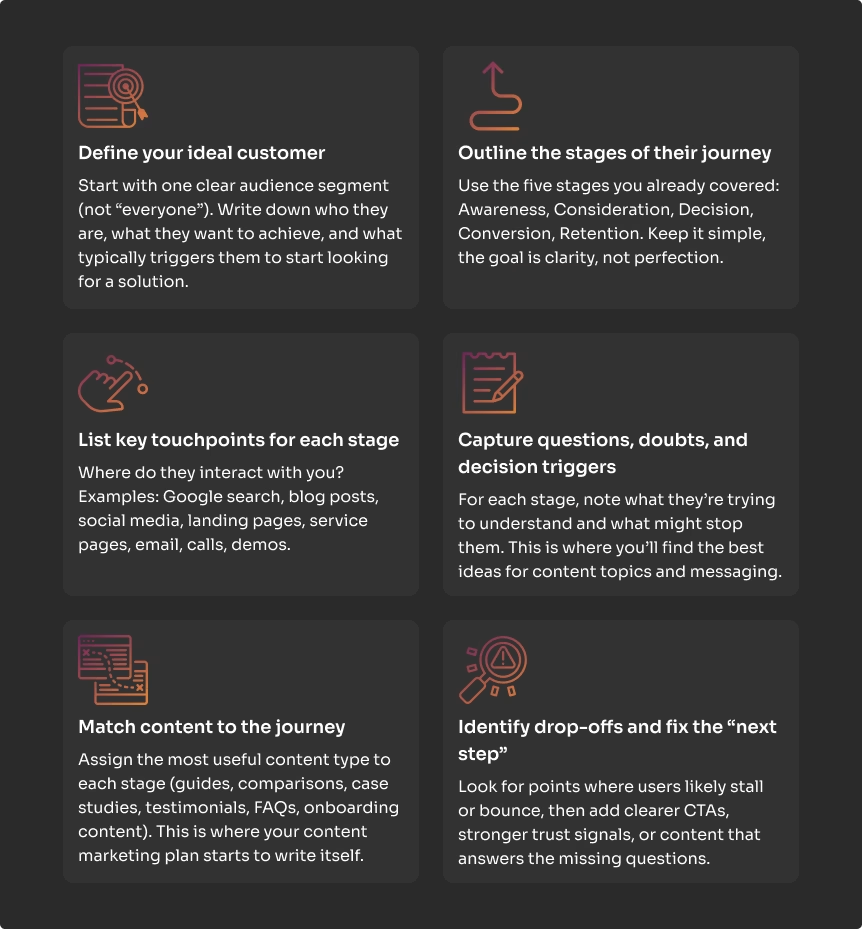
Even a simple map can highlight gaps in decision-stage content. A structured journey map can help turn scattered marketing activities into a guided user experience with a desired outcome. Instead of guessing what content to create or where users drop off or spend time, marketing teams can clearly see how prospects move from awareness to conversion and create content accordingly.
Conclusion
There is a lot more to understanding customer journey maps than just theory. It gives businesses a practical way to see how users interact with their brand, what influences their decisions, and where potential gaps are across the digital marketing funnel.
Instead of viewing traffic, content, and conversions as separate metrics, customer journey mapping connects them into one continuous process. It highlights why users move forward, hesitate, or leave, and reveals whether your content truly supports their decision-making process or simply attracts attention without direction.
When businesses align their content marketing with the customer journey, their messaging becomes more relevant and intentional, and their funnel more effective. Educational content supports early research, strategic content builds trust during evaluation, and conversion-focused assets guide users toward action at the right moment.
Over time, this approach drives more qualified engagement, strengthens brand credibility, and builds more consistent long-term customer relationships.
That is why many organizations choose to approach journey mapping as part of a broader digital marketing strategy. Strategic content marketing services from Ginger IT Solutions focus on aligning content, funnel structure, and user behavior to create more cohesive digital experiences that support the full decision-making process and bring in results.
In our experience, this approach leads to more qualified engagement, more effective messaging, and content that doesn’t just generate clicks. It creates a consistent user experience that guides users, addresses their concerns at the right time, and ultimately supports more sustainable conversions rather than short-term spikes in traffic.