



Brand guidelines set the direction, but consistency is what makes a brand recognizable.
It’s not enough to define how your brand should look and sound. What matters is how consistently those rules are applied across every interaction.
A brand that shows up the same way every time is easier to recognize, easier to trust, and far more likely to stay top of mind.
Brand consistency starts with clear guidelines. To understand how it works in practice, let’s break down what those guidelines include.
What Is Brand Consistency?

Brand consistency is the uniform and cohesive representation of your brand across all touchpoints, both online and offline.
It includes visual elements, messaging, tone of voice, and overall customer experience. In simple terms, it ensures that every interaction a user has with your brand feels aligned and intentional.
Brand Guidelines: What and How?
Brand guidelines are a set of rules that define how your brand should look, sound, and behave across all channels. They should be built around what your brand actually represents.
Practically, brand guidelines ensure that all communication, design, and user interactions align with your brand identity and values, creating a cohesive experience for users across all channels.
The Key Components of Effective Brand Guidelines
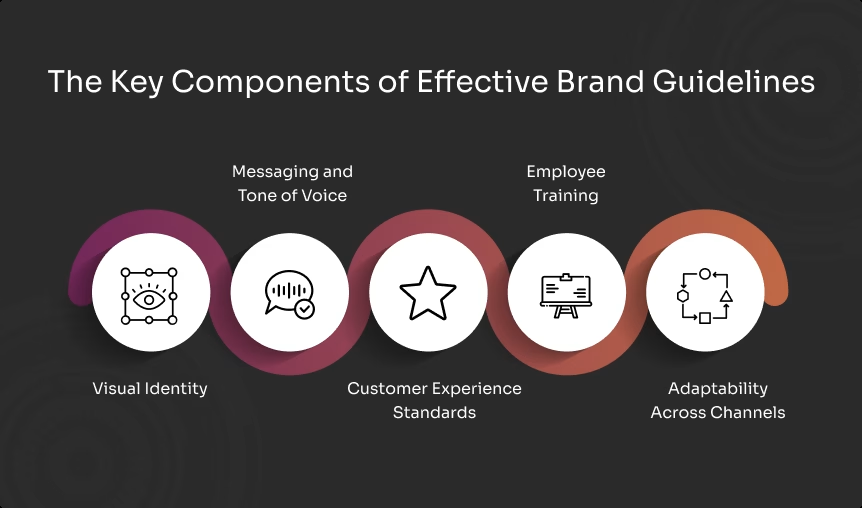
To understand what you need to consider when creating brand guidelines for your own story, focus on a few core components. When clearly defined, these elements shape a consistent and recognizable brand across every touchpoint.
1. Visual Identity
Visual identity includes elements such as the logo, color palette, typography, and imagery.
When creating brand guidelines for the first time, define these elements clearly and set rules for how to use them in different contexts. When your brand can be recognized no matter the placement, it helps users quickly recall it without thinking.
2. Messaging and Tone of Voice
Your brand’s messaging and tone of voice in brand copy defines how you communicate about your brand and with your audience.
Formal, casual, or conversational, consistency is essential. Nobody will trust a dentist whose socials are full of memes but whose website is super-polished and sterile.
A unified voice helps create a noticeable personality and strengthens your brand presence across all communication channels.
3. Customer Experience Standards
Brand consistency extends beyond visuals and messaging onto every interaction a user has with your brand.
People are more likely to take a brand seriously if it maintains consistent interactions across all channels, from the website and digital platforms to customer support and offline engagement.
4. Employee Training
Your team plays a critical role in maintaining brand consistency.
Every employee should understand not just the guidelines, but how to apply them in real scenarios. This is where structured onboarding, accessible internal documentation, and regular QA processes make a measurable difference.
5. Adaptability Across Channels
As more brands adopt an omnichannel approach, adapting without losing consistency becomes essential in their marketing.
While each platform may require slight adjustments in format, messaging, or presentation, your core identity should always remain consistent.
Why Brand Consistency Matters

Don’t make people wonder if it’s you. When users are quick to recognize your brand, they are more likely to form trust and choose you when presented with a need and multiple options.
You Don’t Get a Second Chance for a First Impression
First impressions play a crucial role in how users perceive your brand.
Research indicates that it takes only 0.05 seconds for users to form an opinion about a website, especially in digital environments where users scan rather than read. This highlights the importance of presenting a clear, consistent, and visually aligned brand from the very first interaction.
Fostering Recognition
A consistent brand is easier to recognize and remember.
When users are repeatedly exposed to the same visual elements and messaging, they develop familiarity with your brand. This recognition is essential for building trust and strengthening brand recall.
Building Trust
A study from 2025 claims 90% of consumers buy from brands they trust, while 87% are willing to pay more for products from a brand they trust. This reinforces the claim that trust is the number one factor in building long-term relationships with customers.
Consistency creates a sense of reliability, transparency, and dependability. When users know what to expect from your brand, they are more likely to trust it.
Experience and Emotional Connection
Consistency includes the entire customer experience.
Every interaction, from browsing your website to engaging with customer support, should feel aligned with your brand. Brands that consistently deliver on their promises create emotional connections with users.
When users feel connected to a brand, they are more likely to remain loyal over time.
Impact on Revenue and Market Value
Brand consistency has a direct impact on business performance and brand success.
Sources claim that companies with strong brand consistency often achieve higher market value compared to those with inconsistent branding. These findings highlight the strong connection between brand consistency and long-term success of a business.
Real-World Examples of Brand Consistency

Nike: Motivation as a Brand Language
Nike demonstrates the power of consistency through its strong visual identity and messaging. From the iconic swoosh to the “Just Do It” slogan, every touchpoint reinforces the same mindset of performance, discipline, and motivation. Whether it’s a global campaign or a social media post, the tone and visual language remain instantly recognizable.
Coca-Cola: Emotion as a Signature
Coca-Cola has maintained one of the most consistent brand identities for decades. Its signature red color, distinctive typography, and emotionally driven messaging create a familiar experience across every market and channel. This level of consistency is what allows the brand to evolve without losing recognition.
Stripe: When Product and Communication Speak the Same Language
On the digital side, Stripe is a strong example of consistency in product and communication. Its clean interface, clear documentation, and straightforward tone of voice are aligned across the website, product, and developer resources. This makes the brand feel reliable and easy to work with, especially in a complex technical space.
In contrast, brands that lack consistency tend to feel disconnected. When visuals, tone, and user experience change from one channel to another, it creates uncertainty and makes the brand harder to trust, even if each piece looks good on its own.
How To Apply Brand Consistency in Practice

Understanding why brand consistency matters is one thing; applying it across all communication channels is where most brands start to struggle.
For brands feeling overwhelmed about the level of effort required, from our experience as a full-service digital agency, effort isn’t everything in building brand consistency. It comes from having the right structure in place so that every decision, from design to communication, follows the same direction for one brand.
Create a Single Source of Truth
Your brand guidelines should live in one digital place accessible to everyone involved with representing the brand. Whether it’s a shared document, internal platform, or design system, your team should know exactly where to find the latest assets, rules, templates, and examples.
Without this, small inconsistencies quickly appear in practice. Teams start using outdated logos, different versions of colors and typography, or old messaging copied from previous materials.
What looks like a minor difference internally becomes a fragmented experience for users.
From Guidelines Into Usable Systems
Guidelines explain who your brand is and what it represents. Systems help people apply it.
Instead of relying on written rules alone, create templates, reusable components, and clear frameworks that teams can apply in their daily work.
This is where many brands break down. Design, development, and marketing often move in parallel, and without shared systems, inconsistencies appear between what is designed, what is built, and what is communicated.
The easier it is to apply the rules, the less room there is for misalignment.
Review and Refine Regularly
Brand consistency is not a one-time setup. As your business grows, new channels, campaigns, and team members introduce small variations that add up over time.
In practice, this often shows up as subtle mismatches between marketing campaigns and product experience, or different tones of voice across channels.
Regular reviews help identify these gaps early and keep everything aligned before inconsistencies become part of the brand.
From Brand Guidelines To Consistent Results

To illustrate how this works in practice, here’s an example from the Ginger IT workshop, where we developed and applied brand guidelines for a private clinic in London.
As a newly established clinic, they needed a digital presence that would build trust, meet strict UK healthcare regulations, and clearly communicate multiple services. The challenge was not just creating a website, but ensuring consistency across every interaction, from first visit to ongoing engagement.
We designed and developed a custom website grounded in clear brand guidelines, focusing on intuitive navigation, strong visual hierarchy, and full compliance with accessibility standards (WCAG AAA). These same guidelines were then extended across social media and SEO, including content strategy, blog writing, and publishing, creating a unified system across all channels.
This consistency made the brand easier to recognize, navigate, and trust. As a result, the clinic saw a significant increase in engagement, along with a clear uplift in organic traffic and appointment requests within the first 3 to 6 months, as well as strong rankings (top 10) for relevant, high-conversion keywords.
More importantly, this growth was not short-term. It continued steadily and was sustained over the following year, reinforcing long-term visibility and consistent patient acquisition.
Conclusion
Brand consistency is not something that happens by default. It is the result of clear direction, aligned teams, and consistent execution over time.
Most businesses already have the building blocks: a logo, a website, and some form of messaging. The challenge isn’t creating more, but applying what’s already there in a clear and consistent way across every touchpoint.
This is where many brands start to lose momentum. Channels feel disconnected, messaging shifts, and the overall experience becomes less reliable.
Consistency brings everything back into focus. It strengthens recognition, builds trust, and creates a more predictable and valuable experience for users.
But reaching that level of consistency requires more than guidelines. It requires structure, systems, and the ability to apply them in everyday work.
At Ginger IT Solutions, we help brands turn strategy into execution through thoughtful web design, reliable web development, and tailored branding services. From building scalable websites to creating design systems that support consistency, we focus on aligning design, development, and user experience so your brand feels clear, cohesive, and easy to trust across every channel.
That’s where real brand strength comes from.